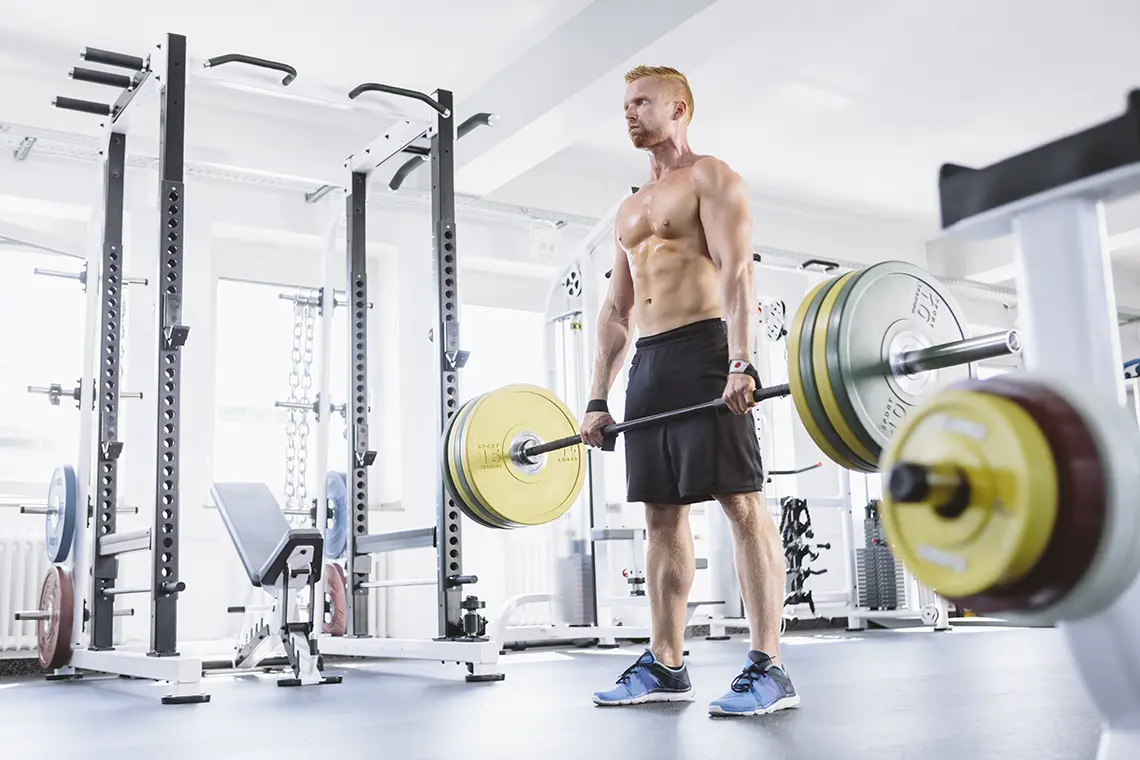
The deadlift, often termed the 'king of lifts,' is a compound movement that engages multiple muscle groups, from your legs to your back to your core.
Whether you're just starting out or have been lifting for years, refining your technique is paramount not only for maximizing gains but also for ensuring safety. This guide will walk you through the steps to perform a perfect deadlift, suitable for both beginners and advanced lifters.
- Foot Position: Begin by standing with your feet roughly hip-width apart. Your shins should be about an inch away from the barbell. For most people, this means the bar is over the middle of the foot.
- Grip: Lean over without bending your knees and grip the barbell. You can choose between a double overhand grip (both palms facing you) or a mixed grip (one palm facing you, one facing away). Beginners often start with the double overhand grip.
- Hand Position: Your hands should be placed just outside your knees. Ensure that your arms aren’t forcing your knees outward or inward.
- Chest Up: Think of pointing your chest up and forward, which will help set your back in the right position. Your spine should be neutral.
- Engage Your Core: Before you start the lift, take a deep breath into your belly (diaphragmatic breathing) and brace your core. This increases intra-abdominal pressure, providing more stability to the spine.
- Drive Through Your Heels: As you start lifting, think of pushing the ground away through your heels. Your weight should remain balanced over mid-foot.
- Extend Hips and Knees: As the bar passes your knees, powerfully extend your hips forward. Both the hips and knees should fully extend in the top position.
- Keep the Bar Close: The barbell should remain in contact with your body (or very close to it) throughout the movement. This minimizes strain on the lower back.
- Stand Tall, Not Back: At the top of the movement, stand tall with a neutral spine. Avoid hyper-extending your lower back.
- Shift Hips Back: Initiate the descent by pushing your hips back.
- Bend the Knees: Once the barbell is past the knees, you can start bending the knees, continuing to keep the bar close.
- Control: Lower the barbell with control, ensuring it travels the same path as on the way up.
- Accessory Movements: Incorporate Romanian deadlifts, deficit deadlifts, or rack pulls to target specific portions of the deadlift and develop strength through sticking points.
- Alternate Stances: Try sumo deadlifts. The wider stance and hand position inside of the knees can be beneficial for those with certain biomechanics or looking to target the hips more.
- Vary Grip Strength: Incorporate grip strength exercises or switch to a hook grip if grip becomes a limiting factor.
- Periodization: Implement periodization techniques in your training program, such as changing volume, intensity, and accessory exercises to continually progress and prevent plateaus.
The deadlift is a powerful exercise that offers numerous benefits, from building muscle to improving overall strength. Whether you're a beginner or a seasoned lifter, always prioritize form over the weight lifted. Regularly review and refine your technique, and consider consulting with a professional trainer or coach to get personalized feedback. Safe lifting!

 Mar 18, 2021
  Comosable Commerce